Custom software vs off-the-shelf: how to decide (and when to combine them)
A practical way to choose between building your own system, buying a ready-made product, or starting from a product and extending it.
 Custom software
We build custom software for clients, and we also build and sell our own software products. That puts us on both sides of this question every week — and the honest answer is that neither option is always right. Here is the framework we use with businesses before recommending either.
Start with the workflow, not the software
Before comparing tools, write down how the work actually happens: who creates the record, who approves it, which documents go out, which reports come back, and the exceptions everyone handles by memory. Most software decisions go wrong because they start with a feature list instead of this map.
Once the workflow is on paper, a pattern usually appears. Large parts of it are common to most businesses — invoicing, stock movements, payroll runs. A smaller part is genuinely specific to you: an approval rule, a wage calculation, a document format, a way your customers order. That split drives the decision.
When an off-the-shelf product is the better choice
If a product already covers most of your workflow, adopting it is faster and usually cheaper than building. Someone else has already solved the edge cases in invoicing, tax and stock valuation, and you benefit from improvements made for every customer.
Products are a strong fit when your process is close to standard practice in your industry, when you need to go live quickly, and when you're comfortable adapting a few habits to the software rather than the other way round. The risk to watch is the workaround: if staff keep a spreadsheet alongside the product, the product isn't covering the workflow.
When custom software pays off
Custom development makes sense when the specific part of your workflow is also the valuable part — the way you price, schedule, approve or serve customers is a reason people choose you. Forcing that into a generic tool removes the advantage.
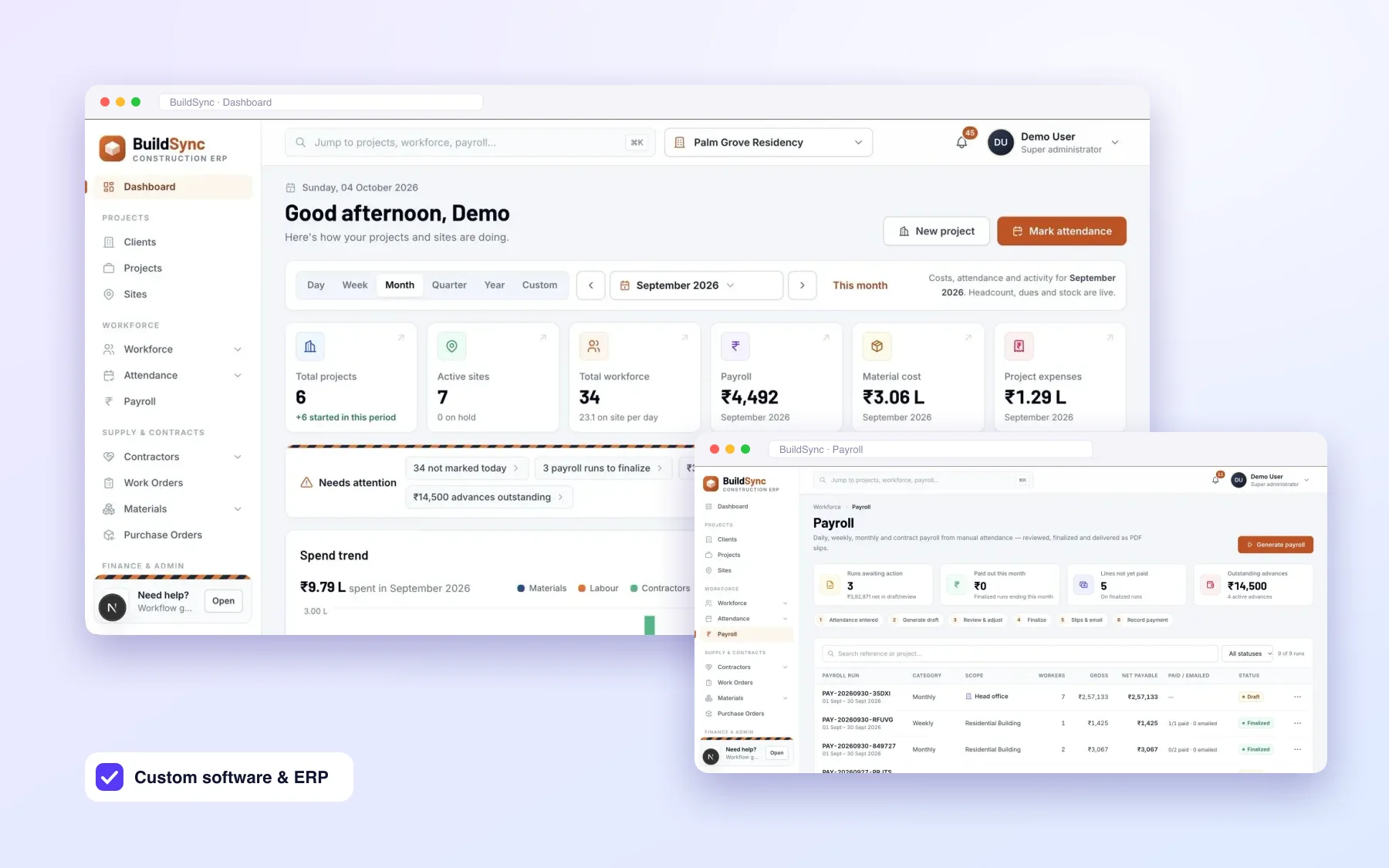
It also suits businesses that need to own the system outright, connect several existing tools, or model something packaged software doesn't handle at all, such as site-based labour on construction projects or multi-step certificate approvals in a college. The trade-off is time and upfront cost, which is why custom projects should be phased: the core goes live first, the rest follows.
The option most businesses overlook: start from a product, then extend it
Between buying and building sits a third path. Start from a product that already handles the common parts well, then add custom modules, rules or integrations for the parts that are yours alone. You avoid paying to rebuild invoicing from scratch, and you still get software that fits.
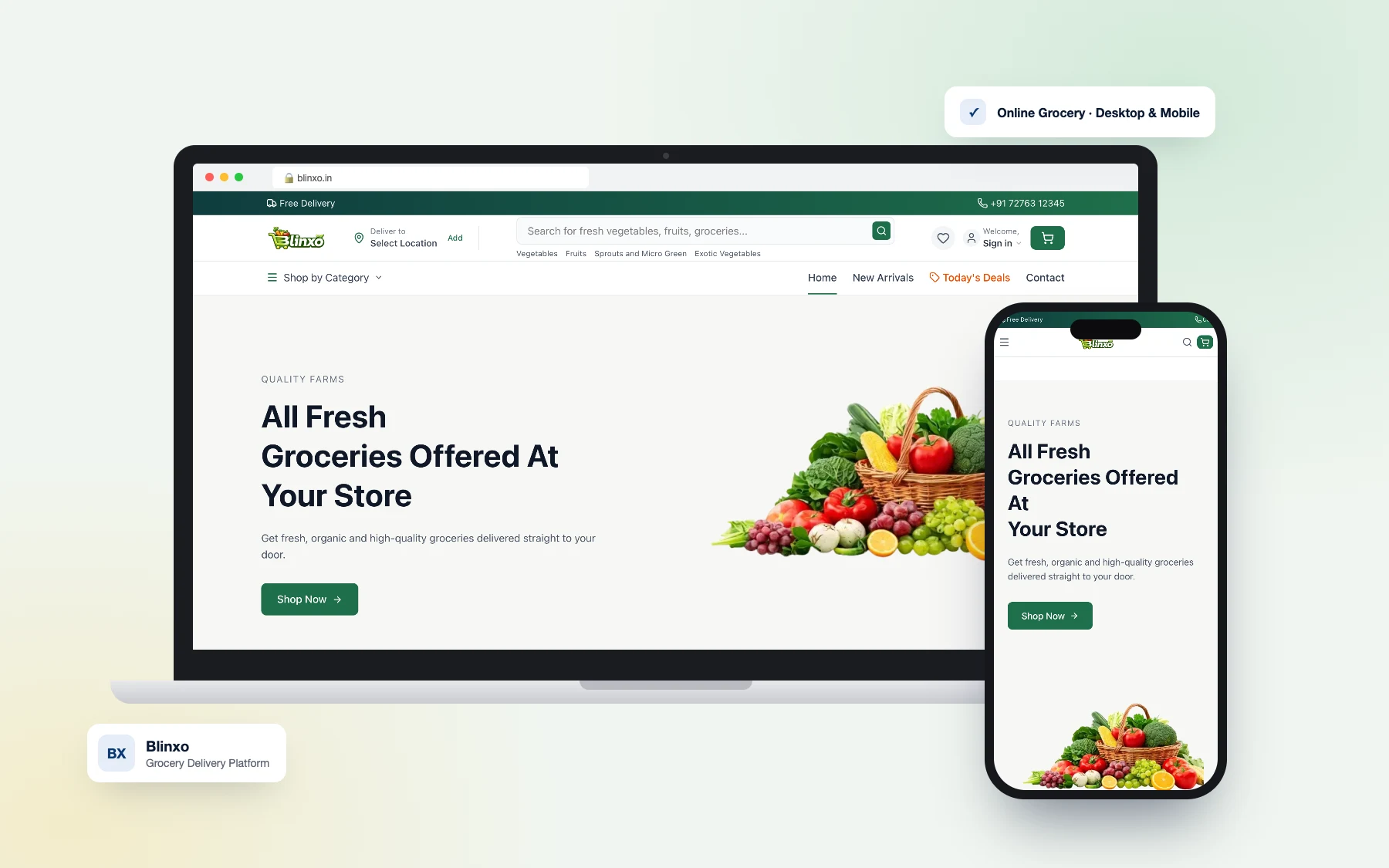
This only works if the product can be extended by the people who know its code. It's the reason we build our own products — BizCore, Core ERP, PayroNext and others — on the same foundations we use for custom work.
Questions to ask before you decide
How much of our workflow does the product cover without workarounds? Which parts of our process are genuinely different, and do they matter to customers? Who owns the data and, for custom work, the code? What happens when we need a change in a year — and who makes it? What does it cost over three years, not just at launch?
If you'd like a second opinion, describe your workflow to us. We'll tell you honestly whether one of our products fits, whether a custom build is justified, or whether a combination makes more sense.
Frequently asked questions
Is custom software more expensive than off-the-shelf?
Usually upfront, yes. Over several years the comparison depends on licence fees, workarounds and how much the specific parts of your workflow matter. A phased custom build or an extended product often narrows the gap.
Can we start with a product and move to custom later?
Yes, as long as your data can be exported. Starting with a product is a good way to learn which parts of your workflow really need custom software.
How long does custom software take to build?
It depends on scope. We phase delivery so the most important module goes live first, with a timeline agreed in the proposal before work starts.
Free consultation
Want a clear, itemised quote for your project?
Tell us what you need — we usually reply within one business day.