
Web app or mobile app: what should your business build first?
How web apps, progressive web apps and native mobile apps differ, and a practical way to decide where to start without paying to build twice.
 Tech guide
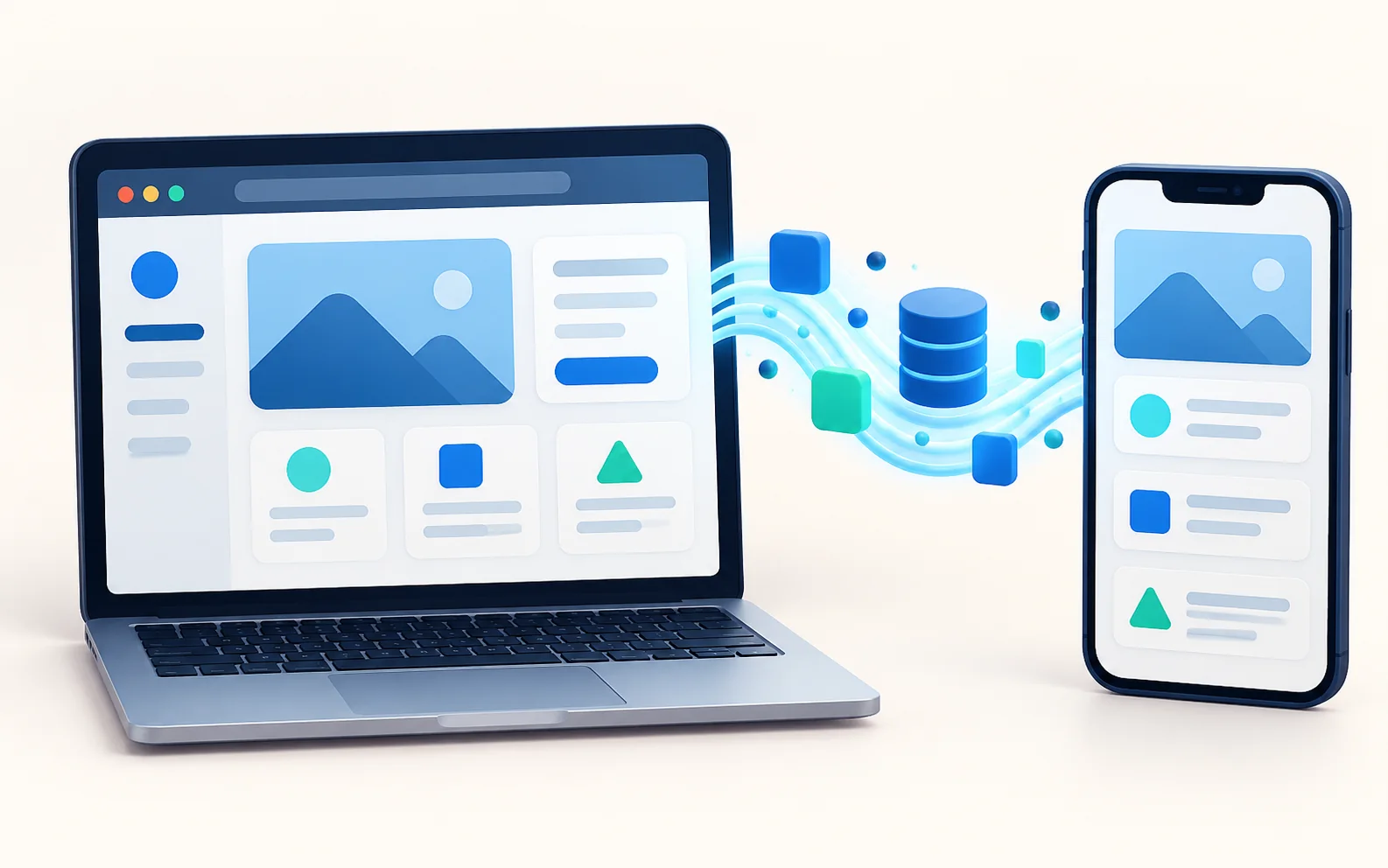
Many businesses come to us asking for an app when what they need is software their customers or staff can use from a phone. That can be a web app, a progressive web app or a native mobile app — and starting with the wrong one often means building twice.
Web apps run in the browser
A web app is software you open at a web address: a booking system, customer portal, dashboard or ERP. It works on phones, tablets and computers from a single codebase, there's nothing to install, and every user gets updates the moment you deploy them.
For internal tools and business systems, a web app is almost always the right starting point. Staff use it on whatever device is at hand, and you avoid app store reviews entirely.
Progressive web apps sit in between
A progressive web app (PWA) is a web app that can be added to the home screen, opens full screen like an app, works with a poor connection and can send notifications on most devices. It's the same codebase as the web app, so it adds little cost.
For many customer-facing ideas, a PWA gives eighty percent of the app experience for a fraction of the price.
When a native mobile app is worth it
Native apps from the App Store and Google Play make sense when you need deep device features — background location, Bluetooth hardware, heavy offline use, advanced camera work — or when customers will open the app many times a week and an icon on their home screen keeps you top of mind.
They cost more: two platforms, app store reviews for every update, and users who don't update. Cross-platform frameworks such as React Native and Flutter reduce the cost by sharing most code between iOS and Android.
A practical order to build in
Build the core system as a web application with a clean API behind it. Launch it, learn how people actually use it, and make it a PWA if phone users need app-like access. Add a native app later only for the users and features that need it, reusing the same API and data.
This order gets something useful live quickly and means the expensive native app is built on proven workflows rather than guesses.
Frequently asked questions
Is a web app cheaper than a mobile app?
Usually, yes. One codebase serves every device and there are no app store requirements, so both the initial build and ongoing updates cost less.
Can a web app work offline?
Partly. A progressive web app can cache pages and data and queue actions until the connection returns. Apps that must work fully offline for long periods are better as native apps.
Can you turn our web app into a mobile app later?
Yes. If the web app is built with a proper API, a mobile app can reuse the same backend and data, so you don't start again.
Free consultation
Want a clear, itemised quote for your project?
Tell us what you need — we usually reply within one business day.